What is Domain Rating? Complete Guide to Ahrefs DR
What is Domain Rating (DR)? Complete guide to Ahrefs DR — learn how Domain Rating is calculated, what a good DR score is, how DR differs from DA, and how to increase your Domain Rating.
What is Domain Rating (DR)?
Domain Rating (DR) is a search engine ranking metric developed by Ahrefs that measures the overall strength of a website's backlink profile. DR scores range from 0 to 100, with higher scores indicating a stronger, more authoritative backlink profile.
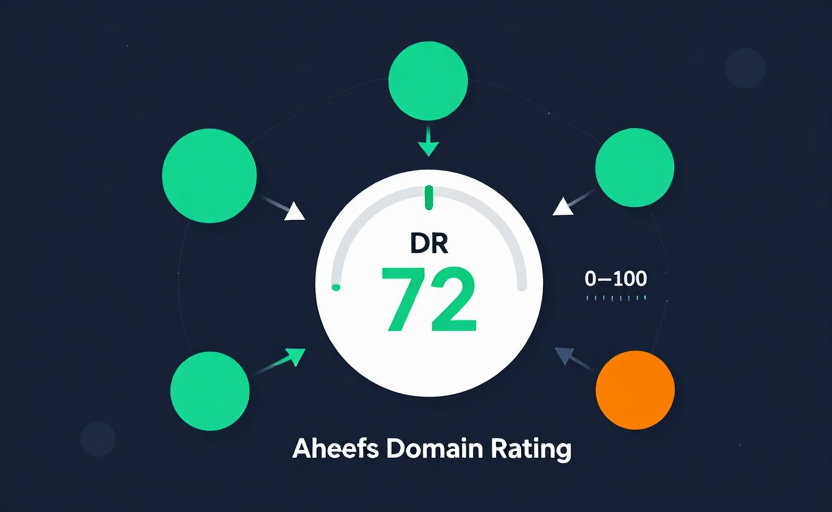
While Domain Authority (DA) from Moz predicts overall ranking potential using many factors, Domain Rating focuses specifically on the strength of your backlinks. Think of DR as a focused "link power" score — it answers the question: based purely on the sites linking to this domain, how strong is its link profile?
Check your Domain Rating now using our free Domain Rating Checker tool. To understand the other major authority metric, see our complete guide to Domain Authority and Page Authority.
How Ahrefs Calculates Domain Rating
Ahrefs calculates DR using a proprietary algorithm that is conceptually similar to Google's original PageRank. The calculation works in three main steps:
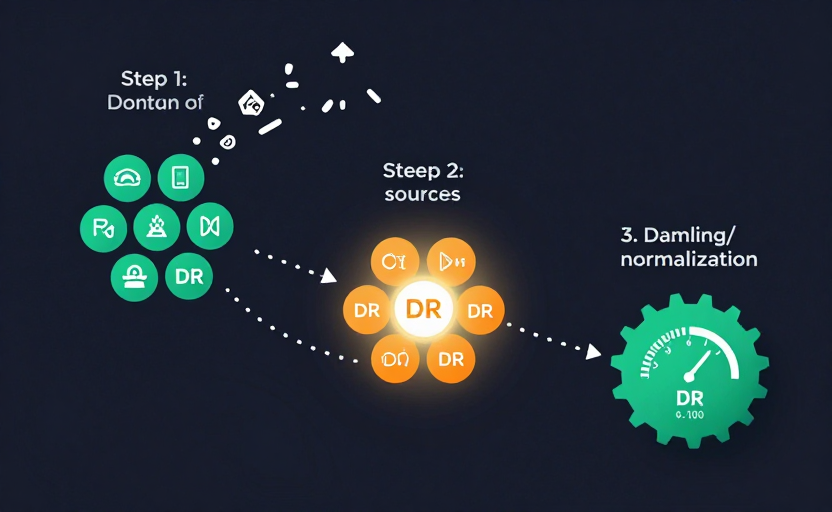
- Ahrefs looks at how many unique domains link to the target site. The number of referring domains (unique linking sites) is the foundation of DR — more unique domains generally means a higher DR.
- It accounts for the DR of those referring domains. A link from a DR 80 site passes far more "DR juice" than a link from a DR 10 site. High-DR referring domains are weighted much more heavily.
- It applies a damping factor and normalizes to 0-100. Ahrefs spreads link equity across all the outbound links a referring domain makes, then applies a damping factor (so equity doesn't loop infinitely) and normalizes the final score to the 0-100 scale.
The key insight is that DR is purely about links — it does not consider content quality, on-page SEO, traffic, or user engagement. This is what makes it different from Moz's DA.
Domain Rating Score Ranges
DR uses a logarithmic scale, which means it is much harder to grow from DR 70 to 80 than from DR 10 to 20. Here is how to interpret DR scores:
| Score Range | Level | Description |
|---|---|---|
| 0-20 | Low | New websites or sites with very few backlinks |
| 21-40 | Below Average | Small websites with limited referring domains |
| 41-60 | Average | Established websites with a moderate link profile |
| 61-80 | Good | Strong, well-linked websites with many quality referring domains |
| 81-100 | Excellent | Top-tier, highly authoritative sites with massive link profiles |
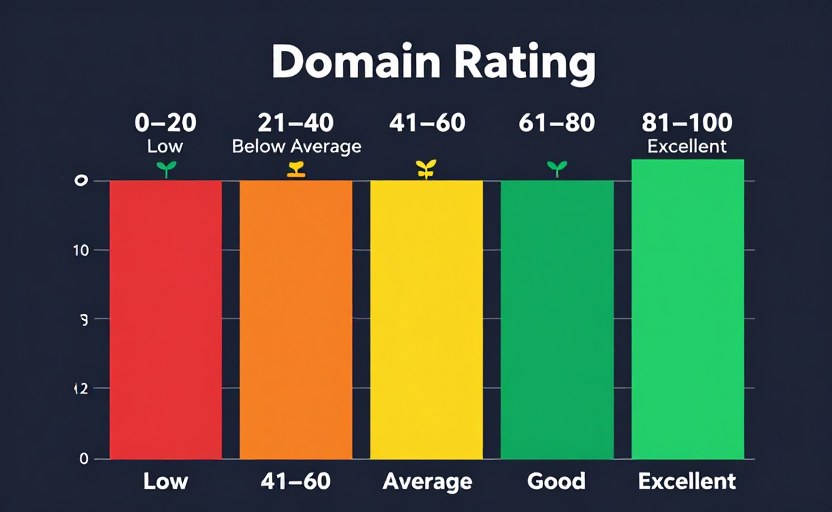
Important: Like DA, DR is comparative. A DR of 50 might be excellent in a niche where competitors sit at DR 30, but weak if your competitors are at DR 70+. Always benchmark against the sites you actually compete with in search results.
DR vs DA: Key Differences
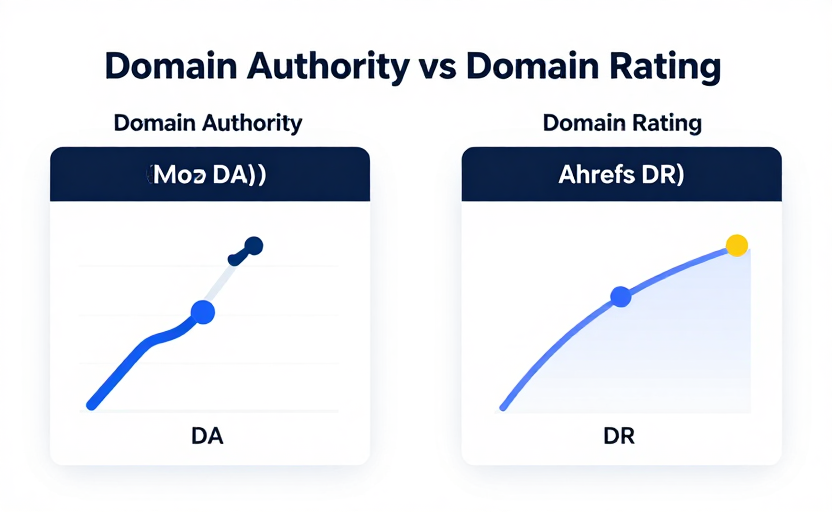
Domain Rating and Domain Authority are the two most widely used authority metrics, but they come from different companies and measure slightly different things. For a full side-by-side breakdown, see our DA vs DR comparison guide.
| Feature | Domain Rating (DR) | Domain Authority (DA) |
|---|---|---|
| Developer | Ahrefs | Moz |
| Scale | 0-100 | 1-100 |
| Focus | Backlink profile strength | Overall ranking potential |
| Algorithm | PageRank-like (links only) | Machine learning (many factors) |
| Considers content/engagement | No | Yes (indirectly) |
| Update frequency | More frequent | Every 3-4 weeks |
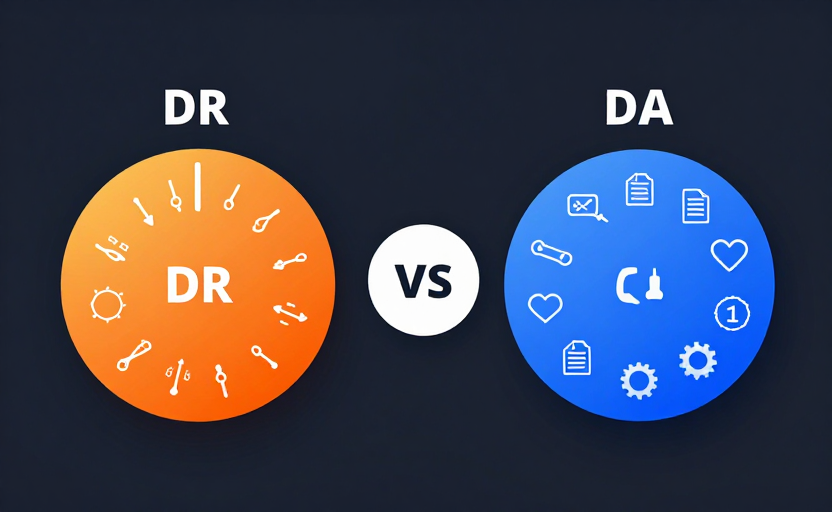
Key insight: Because DR is purely link-based, a content-heavy site with a modest link profile may have a higher DA than DR. Conversely, a site with many strong backlinks but thin content may have a higher DR than DA. When both metrics agree, you can be more confident in your assessment; when they diverge, investigate why.
How to Check Domain Rating
The easiest way to check DR is with our free Domain Rating Checker tool:
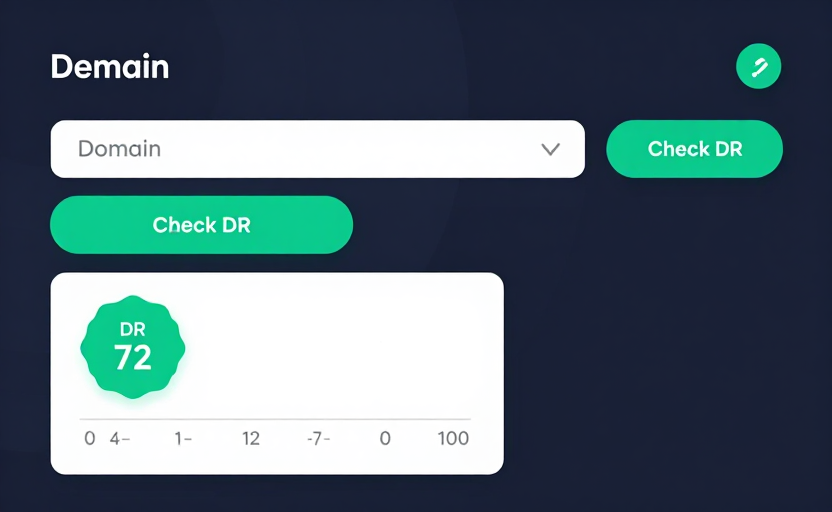
- Enter a domain name (e.g.,
example.com) - Click "Check Domain Rating"
- View the DR score instantly — no Ahrefs subscription required
For checking DR alongside Moz DA and Spam Score, you can also use our DA PA Checker, which reports multiple authority metrics in one place.
How to Increase Domain Rating
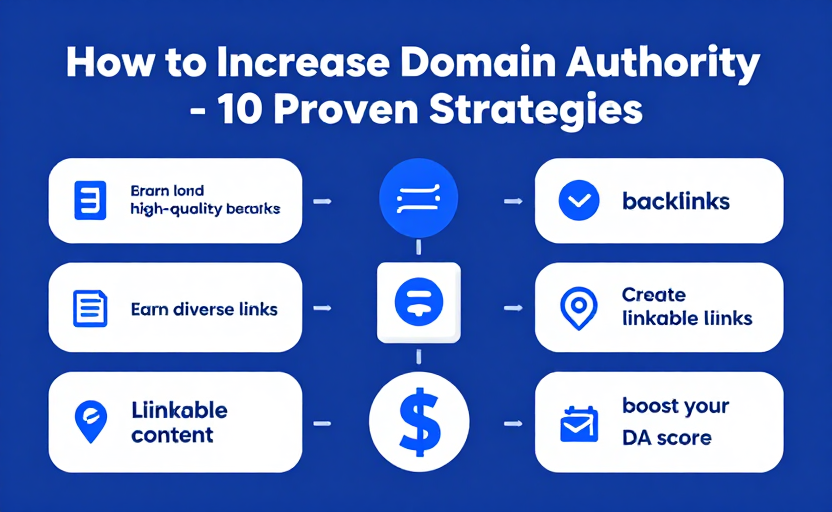
Because DR is driven entirely by your backlink profile, increasing DR means building a stronger, broader, higher-quality link profile. The strategies are largely the same as those for increasing Domain Authority, with an emphasis on link quality:
- Earn links from high-DR sites. A single link from a DR 80 domain can move your DR more than dozens of links from DR 10 domains.
- Diversify your referring domains. DR rewards unique linking domains — 100 links from 100 different domains beats 1,000 links from one domain.
- Create linkable assets. Original research, free tools (like our DA PA Checker), and comprehensive guides naturally attract links.
- Remove toxic backlinks. Use the Spam Score Checker to identify and disavow harmful links that drag down your profile's quality.
- Be patient. DR is logarithmic; meaningful gains take months of consistent, high-quality link building.
Common Domain Rating Myths
Myth 1: "DR is a Google ranking factor." Reality: DR is an Ahrefs metric, not a Google signal. But because DR reflects backlinks — which are a Google ranking factor — a higher DR often correlates with better rankings.
Myth 2: "A higher DR guarantees higher rankings." Reality: DR measures link strength only. Content relevance, quality, and on-page SEO still determine whether you rank for a given query.
Myth 3: "DR and DA should always be similar." Reality: They often differ by 10-15 points because they use different data and algorithms. Large gaps signal something unusual about your link profile versus your broader authority signals.

Conclusion
Domain Rating is one of the most useful metrics for evaluating the strength of a website's backlink profile. While it is not a Google ranking factor, the link strength it reflects is directly tied to how well a site can compete in search results.
Check your Domain Rating now with our free Domain Rating Checker, and pair it with our DA PA Checker and Spam Score Checker for a complete picture of your site's authority. For a deeper comparison of the two biggest authority metrics, read our Domain Authority vs Domain Rating guide.
Frequently Asked Questions
What is Domain Rating (DR)?
Domain Rating (DR) is an Ahrefs metric that measures the strength of a website's backlink profile on a scale from 0 to 100. It is based on the quantity and quality of referring domains and how much link equity they pass.
What is a good Domain Rating score?
A DR of 0-20 is low (new or small sites), 21-40 is below average, 41-60 is average for established sites, 61-80 is good, and 81-100 is excellent. Like DA, DR is comparative — what matters is how your DR compares to competitors.
Is Domain Rating a Google ranking factor?
No, DR is an Ahrefs-specific metric, not a Google ranking factor. However, a strong backlink profile (which DR reflects) correlates with better rankings because backlinks are a confirmed Google signal.
What is the difference between Domain Rating and Domain Authority?
DR is Ahrefs' measure of backlink profile strength using a PageRank-like algorithm focused purely on links. DA is Moz's prediction of overall ranking potential using machine learning on multiple factors. DR is purely link-based; DA considers more signals.
How often does Domain Rating update?
Ahrefs updates DR frequently as it crawls the web and refreshes its link index, more often than Moz updates DA. Still, meaningful DR changes usually take weeks to months of consistent link building.
Can I increase my DR quickly?
Not meaningfully. DR is driven by your backlink profile, which takes time to grow. Going from DR 10 to 30 is achievable in months, but higher DRs require sustained, high-quality link acquisition over years.