Domain Age Checker - Why Domain Age Matters for SEO
Domain age checker guide. Learn what domain age is, whether domain age affects SEO rankings, how to check domain age, and how domain age compares to domain authority.
What is Domain Age?
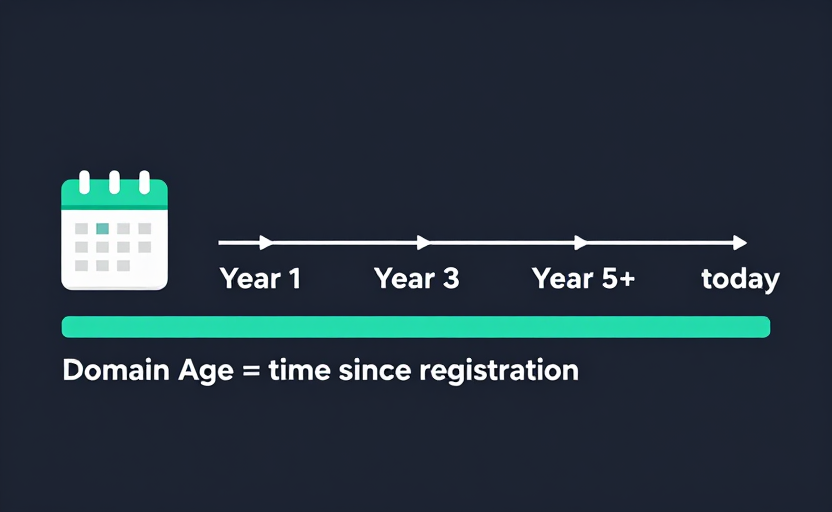
Domain age is the length of time that has passed since a domain name was first registered. It is measured from the original registration date recorded in the WHOIS database — not from when a website was first built on the domain.
For example, if a domain was registered on January 1, 2015, its domain age is calculated from that date. A domain registered yesterday has a domain age of zero.
You can check domain age alongside DA, PA, and Spam Score using our DA PA Checker. Domain age is one of several signals that, together, help you assess how established and trustworthy a domain is.
Does Domain Age Affect SEO?
The short answer: domain age has a small, indirect effect — it is not a major ranking factor.
Here is the nuance:
- Very new domains may rank more slowly. Google often applies a degree of caution to brand-new domains while it assesses their trustworthiness and intent. This is sometimes called the "sandbox" effect, though Google has never officially confirmed a sandbox.
- Beyond the first few months, age itself matters little. Google's Matt Cutts famously noted that the difference between a 6-month-old and a 12-month-old domain is negligible. Age alone does not push you up the rankings.
- Older domains correlate with better rankings — but not because of age. Older domains have simply had more time to accumulate backlinks, authority, and content. It is those accumulated assets, not the age, that drive rankings. To understand the authority metric that captures this, read our guide to Domain Authority.
Bottom line: Do not chase domain age. Chase the authority, content, and backlinks that older domains tend to have.
How to Check Domain Age
There are two common ways to check domain age:
- WHOIS lookup. Use a WHOIS service to find the domain's creation date. This is the raw registration date, but WHOIS data can be obscured by privacy protection.
- A domain age checker tool. Tools like our DA PA Checker resolve the registration date and report domain age alongside other metrics like DA, PA, and Spam Score — giving you a fuller picture in one check.
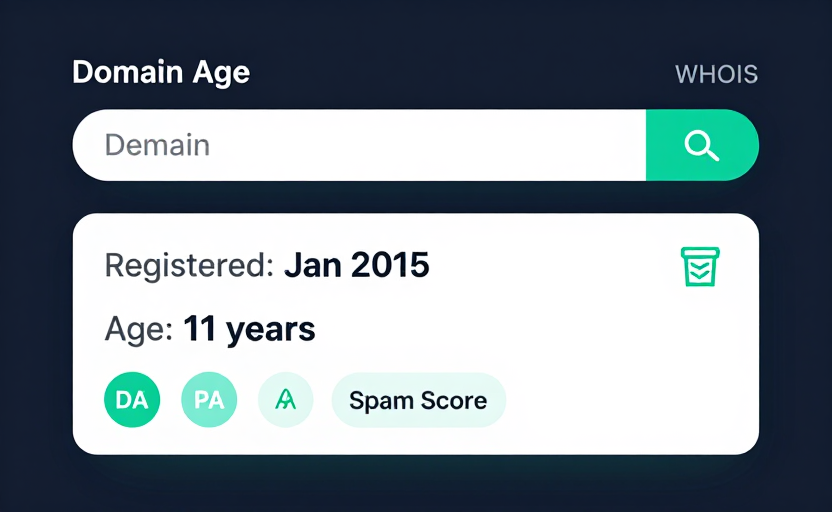
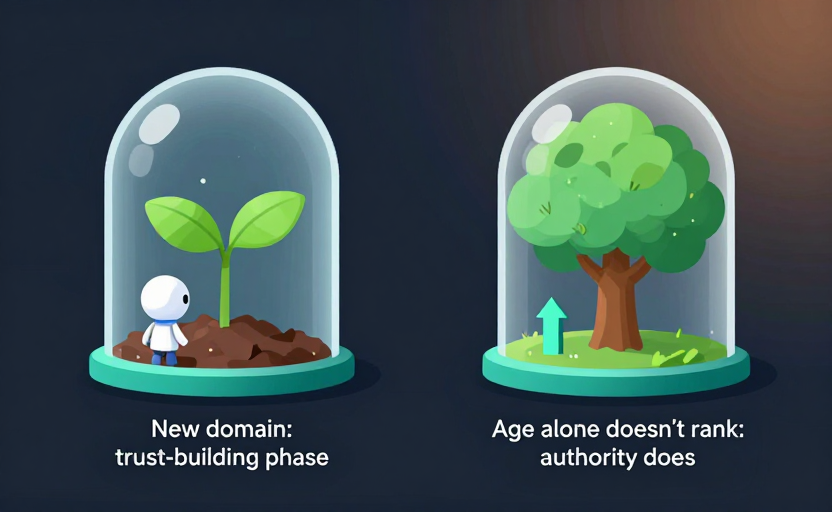
When checking domain age, always pair it with authority and spam metrics. An old domain with a toxic backlink profile is a liability, not an asset.
Domain Age vs Domain Authority
People often confuse domain age with domain authority, but they measure very different things:
| Feature | Domain Age | Domain Authority (DA) |
|---|---|---|
| What it measures | Time since registration | Ranking potential based on backlinks |
| Scale | Time (years/months) | 1-100 |
| Directly affects rankings | No (indirect only) | No, but correlates strongly |
| Can be improved | No (only increases with time) | Yes, via link building |
| Matters for new domains | Somewhat (trust-building phase) | Yes |
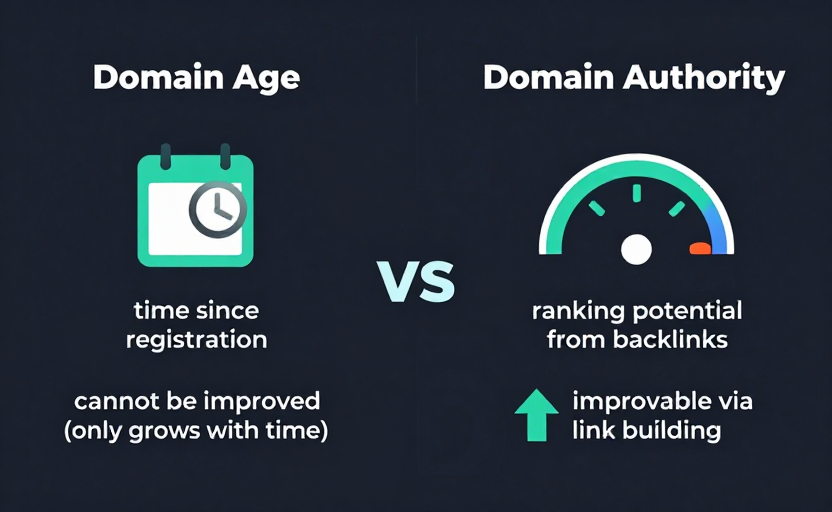
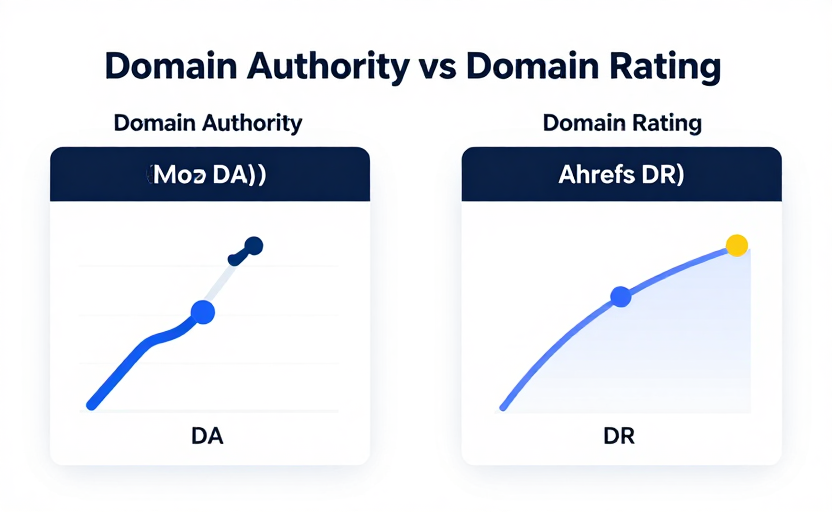
Key insight: Domain authority is actionable — you can increase it through link building and content. Domain age is not; it only increases with the passage of time. Focus your energy where it produces results. For a comparison of the two main authority metrics, see our DA vs DR guide.
Buying Aged Domains: Pros and Cons
Some SEOs buy aged domains hoping to inherit their history and authority. This can work, but it carries real risks.
Pros:
- An aged domain may come with an existing backlink profile and authority
- It may already be indexed and trusted by Google
- A relevant aged domain can give a head start in a competitive niche
Cons:
- The domain may have been penalized or deindexed in the past
- Its backlink profile may be toxic — always check the Spam Score first
- Backlinks often disappear after a domain changes hands, especially if the content changes
- You may inherit a bad reputation or unnatural link patterns
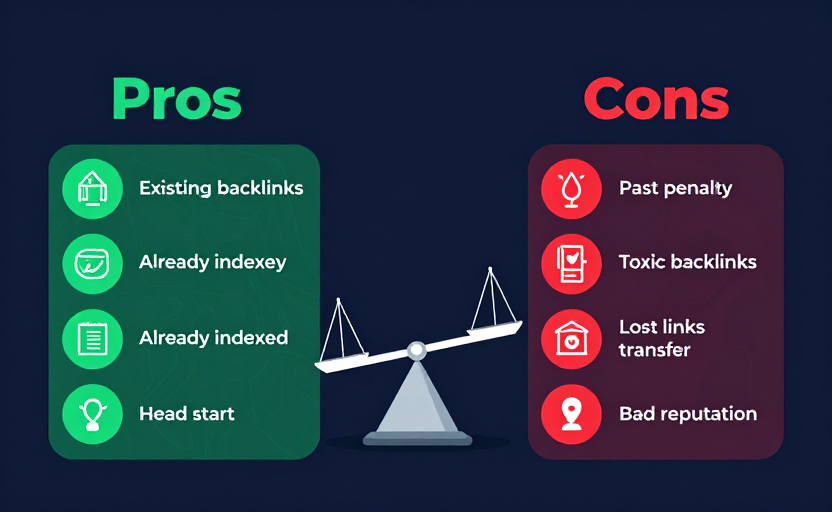
If you buy an aged domain: Audit its full backlink profile, check its Spam Score, verify it is not penalized, and keep the content relevant to its existing links.
Conclusion
Domain age is a minor, indirect SEO signal. A brand-new domain may take time to earn Google's trust, but beyond that, age itself does not drive rankings — the authority, backlinks, and content a domain accumulates over time do.
Check any domain's age, DA, PA, and Spam Score with our free DA PA Checker. To dive deeper into the metrics that actually move rankings, read our complete guide to Domain Authority and learn how to increase your Domain Authority.
Frequently Asked Questions
Does domain age affect SEO?
Domain age has a small, indirect effect on SEO. A very new domain (under 6 months) may rank more slowly as Google assesses its trustworthiness, but beyond that, domain age itself is not a major ranking factor. What matters is the authority, content, and backlinks an older domain has had time to build.
How do I check my domain age?
You can check domain age using a WHOIS lookup or a domain age checker tool that queries the domain's registration date. Our DA PA Checker reports domain age alongside DA, PA, and Spam Score for any domain you check.
Is an older domain better for SEO?
Not automatically. An older domain is only better if it has accumulated authority, quality backlinks, and a clean history over time. A new domain with strong content and link building can outperform an old, neglected domain.
Is domain age a Google ranking factor?
Domain age is not a direct Google ranking factor. Google has stated that the difference between a 6-month-old and a 1-year-old domain is negligible. However, older domains often correlate with better rankings because they have had more time to earn trust and backlinks.
Should I buy an aged domain for SEO?
Buying an aged domain can help if it has a clean backlink profile and relevant history, but it carries risks: the domain may have been penalized, have toxic backlinks, or lose its existing links after transfer. Always audit an aged domain's backlinks and spam score before buying.
What is a good domain age?
There is no 'good' domain age threshold. Domains older than 2-3 years tend to have had time to build authority, but a domain's value depends far more on its backlink profile, content, and spam score than on age alone.