What is Spam Score? Complete Guide to Moz Spam Score
What is spam score? Complete guide to Moz Spam Score — learn the 27 spam flags, what causes high spam score (1-100%), and how to reduce it to protect your SEO rankings.
What is Spam Score?
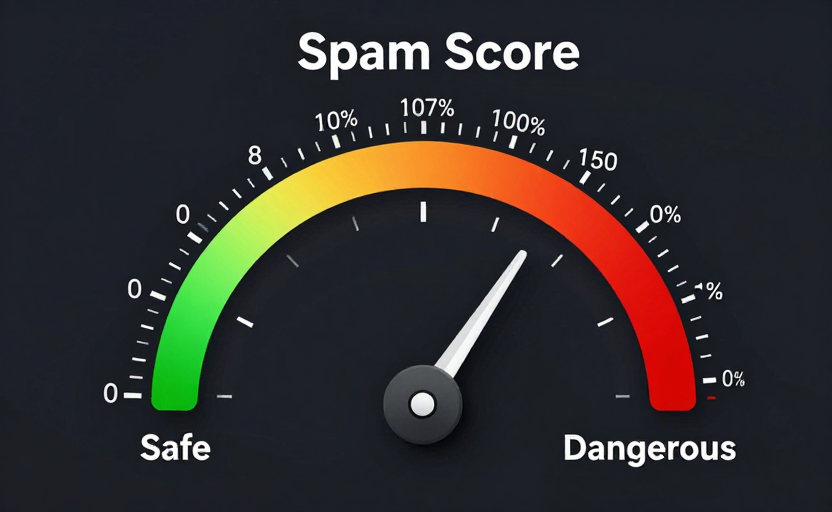
Spam Score is a metric developed by Moz that predicts the likelihood that a website has been penalized or flagged as spam by search engines. It's expressed as a percentage from 0% to 100%, where a higher percentage indicates a greater likelihood of spam.
Unlike Domain Authority (DA), which measures positive ranking signals, Spam Score measures negative signals — characteristics that correlate with websites Google has penalized or banned. To learn more about DA, see our complete guide to Domain Authority and Page Authority.
Check your Spam Score now using our free Spam Score Checker tool.
How Moz Calculates Spam Score
Moz Spam Score is based on a set of 27 correlation flags — site-level features that Moz found to be strongly correlated with sites that have been penalized by Google.
The methodology works like this:
- Moz identified a corpus of sites that have been banned or penalized by Google
- They analyzed these sites to find common characteristics (flags)
- They identified 27 flags that have the strongest correlation with penalized sites
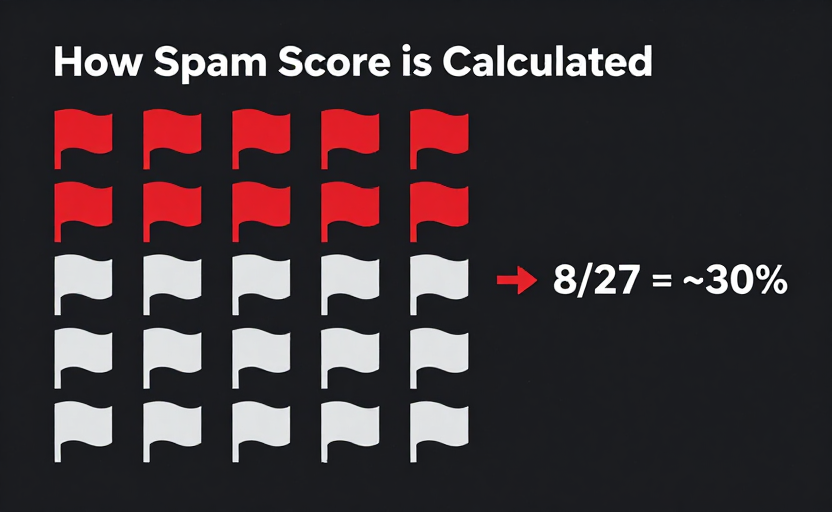
- Your Spam Score = the percentage of these 27 flags your site triggers
For example, if your site triggers 8 out of 27 flags, your Spam Score is approximately 30%.
The 27 Spam Score Flags
Moz's 27 flags fall into several categories:
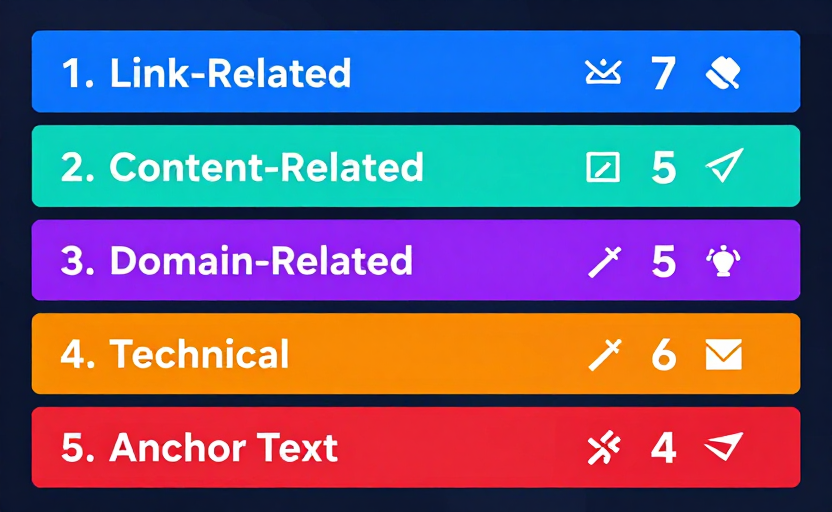
Link-Related Flags
- Low ratio of internal to external links
- High ratio of nofollow to dofollow links
- Low number of internal links
- High number of external links
- Low MozRank
- Low MozTrust
- Large site with few links
Content-Related Flags
- Thin content (low word count)
- High ad-to-content ratio
- Duplicate or scraped content
- Keyword stuffing
- Hidden text or links
Domain-Related Flags
- Domain name contains spammy keywords
- Domain is very new
- Domain has suspicious TLD
- Domain length is unusually long
- Numbers in domain name
Technical Flags
- No HTTPS/SSL certificate
- Missing contact information
- No privacy policy
- No terms of service
- Excessive redirects
- Cloaking or sneaky redirects
Anchor Text Flags
- Over-optimized anchor text
- High ratio of money keyword anchors
- Low diversity in anchor text
Note: The exact list of 27 flags is proprietary to Moz. The above represents the general categories they cover.
Spam Score Ranges
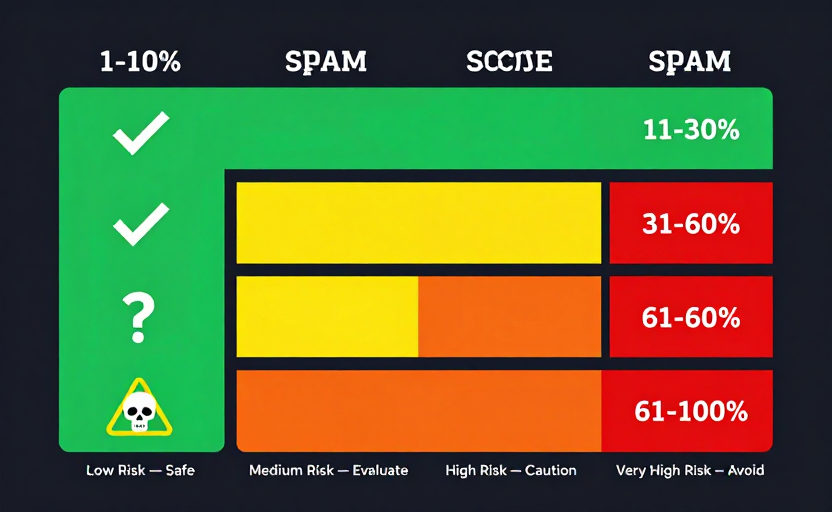
| Score Range | Risk Level | What It Means |
|---|---|---|
| 1-10% | Low | The site shares few characteristics with penalized sites. Safe for link building. |
| 11-30% | Medium | The site triggers some spam flags. Evaluate carefully before linking. |
| 31-60% | High | The site shares many characteristics with penalized sites. Proceed with caution. |
| 61-100% | Very High | The site strongly resembles penalized sites. Avoid building links from this site. |
Important: A high Spam Score does NOT mean a site is definitely spammy. It means the site shares characteristics with sites that have been penalized. Always investigate the specific flags triggered before making judgments.
What Causes High Spam Score?
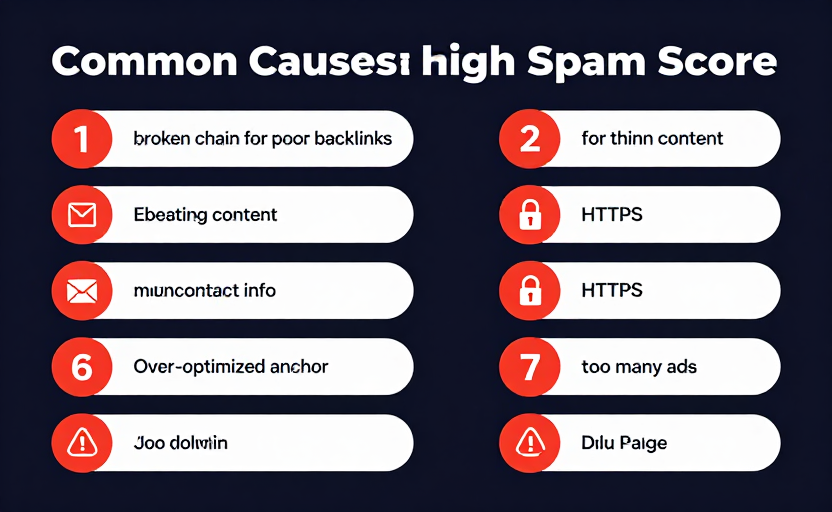
Common causes of high Spam Score include:
- Poor backlink profile — Too many links from low-quality or irrelevant sites
- Thin content — Pages with very little useful content
- Missing contact information — No way for users to contact the site owner
- No HTTPS — Lack of SSL certificate
- Suspicious domain characteristics — Unusual TLD, excessive numbers in domain
- Over-optimized anchor text — Too many links with exact-match keywords
- Excessive ads — High ad-to-content ratio
- Duplicate content — Content scraped or copied from other sources
How to Reduce Spam Score
If your site has a high Spam Score, here's what you can do:
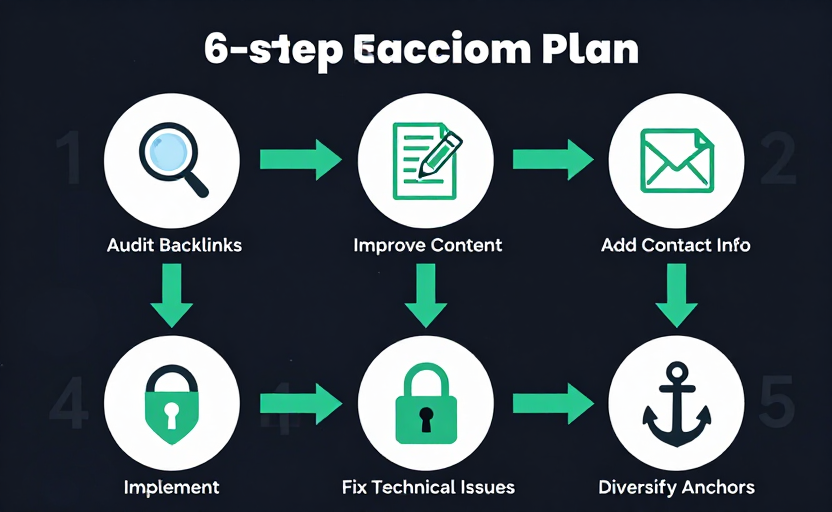
1. Audit Your Backlink Profile
- Use our DA PA Checker to check the DA and Spam Score of sites linking to you, and learn how to increase your Domain Authority to offset toxic links
- Identify toxic backlinks from high-Spam-Score domains
- Disavow harmful links using Google's Disavow Tool
2. Improve Content Quality
- Add substantial, original content to thin pages
- Remove or consolidate duplicate content
- Ensure every page provides genuine value to users
3. Add Contact Information
- Include a visible email address or contact form
- Add physical address information if applicable
- Create an "About Us" and "Contact" page
4. Implement HTTPS
- Get an SSL certificate (free via Let's Encrypt)
- Redirect all HTTP traffic to HTTPS
- Update internal links to use HTTPS
5. Fix Technical Issues
- Remove unnecessary redirects
- Ensure no cloaking or hidden content
- Fix broken links and 404 errors
6. Diversify Anchor Text
- Build links with varied, natural anchor text
- Include branded anchors, URL anchors, and contextual anchors
- Avoid over-optimizing for exact-match keywords
Spam Score and SEO: Should You Worry?
Short answer: A high Spam Score itself doesn't directly hurt your Google rankings. But the underlying issues it identifies often do.
Long answer:
- Moz Spam Score is not a Google metric — Google has its own spam detection
- However, the flags Moz identifies (toxic links, thin content, etc.) are also things Google penalizes
- Think of Spam Score as a warning system — it alerts you to potential issues that could attract Google's attention
- A low Spam Score doesn't guarantee good rankings, but a high one suggests problems worth investigating
Spam Score for Link Building
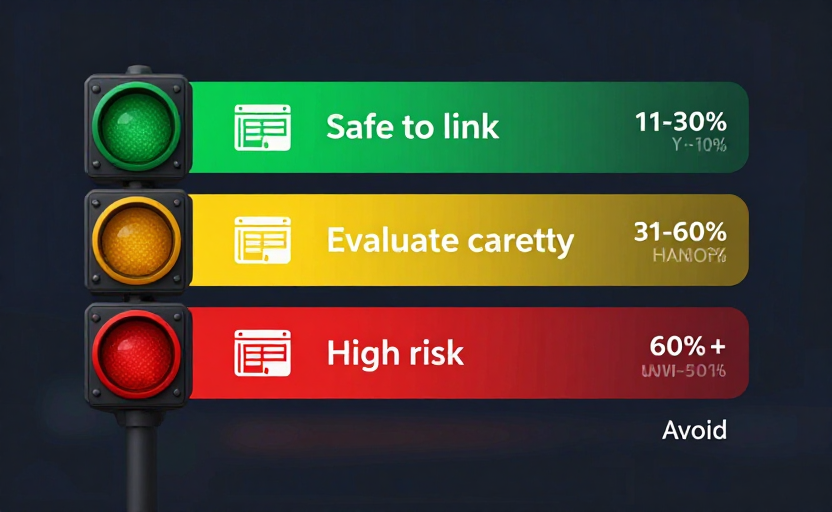
When building links, Spam Score is your safety check:
- Spam Score 1-10%: Safe to pursue for link building
- Spam Score 11-30%: Evaluate the site carefully — check content quality, relevance, and other factors
- Spam Score 31%+: Generally avoid — the risk outweighs the potential benefit
- Spam Score 60%+: Strongly avoid — these sites are likely to cause more harm than good
Pro tip: Use our Bulk DA PA Checker to check both DA and Spam Score for potential link targets in bulk. This saves time and helps you quickly filter out risky sites.
Conclusion
Spam Score is a valuable metric for identifying potential SEO risks. While it's not a direct Google ranking factor, the issues it highlights (toxic links, thin content, missing contact info) are things that can hurt your SEO. Regular monitoring and proactive cleanup are the best approach.
Check your Spam Score now with our free Spam Score Checker, and take action to protect your site's SEO health.
Frequently Asked Questions
What is a good Spam Score?
A Spam Score of 1-10% is low risk and safe for link building. 11-30% is medium risk — evaluate carefully. 31-60% is high risk. 61-100% is very high risk and you should avoid building links from these sites.
Does high Spam Score affect Google rankings?
Spam Score itself is not a Google metric and doesn't directly hurt rankings. However, the underlying issues it identifies (toxic links, thin content, missing contact info) are things Google may penalize. Think of it as a warning system.
How can I reduce my Spam Score?
Audit and remove toxic backlinks, improve content quality, add contact information, implement HTTPS, fix technical issues like broken links and unnecessary redirects, and diversify your anchor text profile.
What are the 27 Spam Score flags?
Moz's 27 flags fall into categories: link-related (low MozRank, high external links), content-related (thin content, keyword stuffing), domain-related (spammy keywords in domain, suspicious TLD), technical (no HTTPS, missing privacy policy), and anchor text flags (over-optimized anchors).
Should I avoid sites with high Spam Score for link building?
Generally yes. Sites with Spam Score above 30% should be avoided for link building. Sites with 11-30% should be evaluated carefully. Always check the specific reasons for a high score before making a decision.